Securing an industrial building today is not the same as it was ten years ago. In 2025, technological evolution has completely transformed security needs and solutions. Criminals are more sophisticated, threats are more diverse and the consequences of a breach can be devastating, both in terms of financial loss and reputational damage.
We know it first hand. At Alarmas Catalunya we have been working for years in the protection of industrial buildings and we have seen how traditional systems have fallen short of today’s challenges.
Therefore, in this article I want to share with you real, updated and functional keys to protect your industrial building in 2025. All based on what we apply every day with our customers.
You will see from basic evaluations to solutions with artificial intelligence that eliminate the typical errors of old perimeter systems. This is a guide for business owners, security managers and facility managers looking not only to protect their investment, but also to gain peace of mind.
Know the weak points of your vessel
Before thinking about cameras, sensors or AI, the first step is analysis. It sounds basic, but you’d be surprised how many industrial buildings operate without a real diagnosis of their vulnerabilities. This includes physical access as well as blind spots, poor lighting, poorly supervised loading areas or errors in the management of external personnel.
The security audit should answer questions such as:
- How many accesses are there and how are they controlled?
- Is there an entry/exit log?
- Do the hours of activity coincide with the periods of greatest risk?
- Do current cameras have night vision or continuous recording?
In our experience, many homeowners install technology without a strategy. It’s like buying a car alarm and leaving the car unlocked. What works in 2025 is to have a comprehensive, integrated view of security. Only then can you decide which systems you really need.
The new era of video surveillance: artificial intelligence in action
This is where the great revolution comes into play: video analytics with artificial intelligence. We are no longer just talking about cameras that record, but systems that interpret what they see in real time. At Alarmas Catalunya we use this technology to detect suspicious movements, identify anomalous behavior and send precise alerts without the need for additional sensors.
The difference? AI reduces false alarms by more than 90%. It recognizes the difference between a branch blowing in the wind and a person jumping a fence. In addition, it does not need constant light, as many systems work with thermal or infrared vision.
This makes it possible to detect:
- Intrusion attempts prior to actual entry
- People loitering in unauthorized areas
- After-hours activities
- Changes in habitual movement patterns
It is a technology that used to be available only to large corporations, but today it is accessible to industrial SMEs that want professional-level solutions.
Goodbye to perimeter sensors? What you should know
For years, perimeter sensors were the basis of protection in many halls. Buried cables, infrared barriers or outdoor motion detectors were the norm. But in 2025, many of these systems are obsolete.
Why? Because they generate a very high volume of false alarms, need constant maintenance and can be easily breached. At Alarmas Catalunya we have decided to eliminate them from most installations, replacing them with intelligent video surveillance that is more accurate and much more difficult to fool.
With AI, there is no need to saturate the perimeter with technology that requires calibration. A good analytical camera at a strategic point is enough to cover an entire facade with greater reliability. In addition, it can be integrated with other systems to automate responses such as:
- Lighting of perimeter lights
- Automatic access locking
- Direct call to alarm receiving center
The key is to do more with less: less equipment, fewer mistakes, more intelligence.
Access control: technology at the service of security
It is not enough to have cameras if anyone can enter without control. Access control is a critical part of any industrial security strategy, and in 2025, systems have evolved beyond simple keys or cards.
Today, technologies such as:
- Biometric readers (fingerprint, iris, facial recognition)
- Access codes with dynamic verification
- Electronic keys with expiration date and usage record
- Integration with mobile apps for temporary authorizations
These systems not only prevent unauthorized access, but also record who entered, when and where, generating total traceability. This is vital in cases of internal theft or labor disputes.
Lighting, signage and visual deterrents
Prevention is the first step in security, and few things are as much of a deterrent as a well-lit and marked perimeter. It’s not just about seeing well, it’s about making protection visible.
What elements are recommended in 2025?
- LED lighting with motion sensors
- Visible signage for video surveillance and restricted areas
- Flashing beacons at entrances and critical points
- Visible cameras combined with hidden cameras
In addition, integrating this lighting with artificial intelligence allows automating the reaction: if an intruder is detected, lights, sirens and notifications are activated without human intervention.
A properly illuminated and marked ship is not an easy target. Many intrusions are stopped in the reconnaissance phase precisely because of this.
Internal protocols, the human factor in the equation
No matter how much technology you have, if operators leave doors open or share credentials, security breaks down. This is where internal security protocols come into play.
Things as basic as:
- Staff training on how to act in the event of a break-in attempt
- Periodic review of active accesses
- Rules on visits, carriers and subcontractors
- Emergency drills
At Alarmas Catalunya we always insist that security is a shared commitment. The best AI in the world cannot prevent someone from leaving a door ajar when they leave.
Combining technology with organizational culture is what makes the real difference.
Common mistakes that continue to be costly today
Despite all the advances, there are mistakes that we continue to see year after year:
- Installing cameras without real perimeter coverage
- Placing sensors where there is vegetation (classic mistake!)
- No connection to an alarm receiving center.
- Using home WiFi in industrial installations
- Failure to update accesses when personnel changes
Each of these errors can leave an industrial building completely vulnerable. What’s worse, many are only discovered after an incident.
That’s why my advice is always to have an external audit every 12 months. An expert eye can detect in minutes what goes unnoticed by those who live day to day on the ship.
Smart and connected security
The future of industrial security is not just in better cameras, but in total connectivity between systems. Imagine this:
- Cameras that detect activity and alert the control panel
- The control panel analyzes the event with AI and activates sirens or lights.
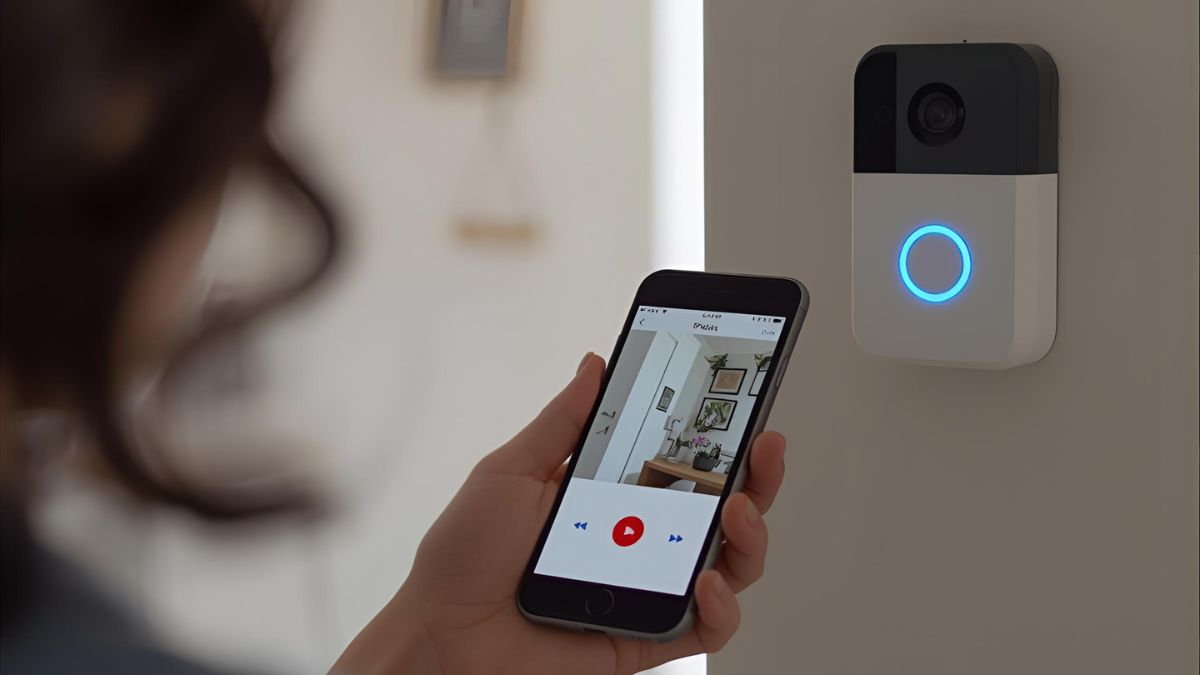
- The responsible party’s cell phone receives real-time video notification
- Everything is recorded with full legal traceability
This is already possible today, and it is what we implement from Alarmas Catalunya in ships that want to leave behind the mistakes of the past. Proactive, intelligent and real time security.
Integration with mobile apps, management from the cloud and the ability to monitor everything from anywhere is a radical change in how business protection is understood.
How to protect an industrial building and sleep peacefully?
Protecting an industrial building in 2025 is not an optional task, it is a strategic responsibility. And as we have seen, it is not enough to have cameras or alarms: an integrated, intelligent system adapted to current risks is needed.
Thanks to technologies such as video analytics with artificial intelligence, remote control and automation, it is now possible to create safe environments with a precision previously unthinkable.
At Alarmas Catalunya we are clear: the security of an industrial building does not depend on the number of sensors, but on the quality of the decisions. That is why we eliminate old systems and bet for intelligent, efficient and adapted solutions for each client.
If you are evaluating how to protect your vessel this year, start with analysis, eliminate what is useless, and bet on what really gives you control, prevention and peace of mind.